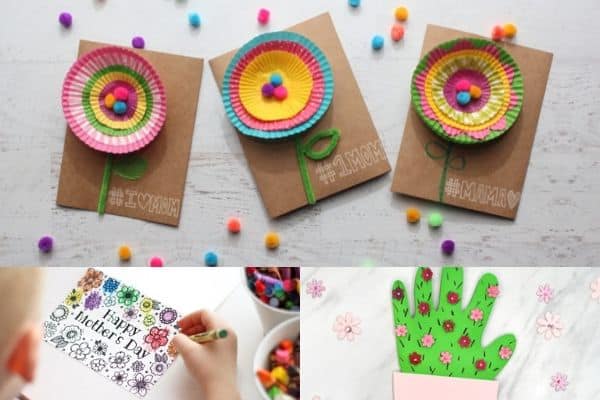
25 Indoor Easter Activities for Kids
You can create a full day of cozy, low-stress Easter fun indoors with these indoor Easter activities for kids that work for every age.
From egg hunts with clues to decorating stations, sensory bins, baking projects, puppet shows, and simple crafts, these ideas help turn an ordinary day at home into a memorable Easter celebration.
Many of these activities use cheap supplies you likely already have at home, making them easy to set up without extra shopping.
Group materials in labeled bins, use drop cloths for messy crafts, and keep a quiet corner for breaks. You can even build a themed Easter activity week from one simple idea.
Whether the weather keeps you inside or you simply want a relaxed celebration, these indoor Easter activities help families create fun memories together.

Why Indoor Easter Activities Work for Families
Even when the weather refuses to cooperate, indoor Easter activities for kids can make the holiday just as exciting as an outdoor celebration.
In many ways, celebrating Easter indoors works even better.
You control the pace, choose cozy spaces, and adapt activities to fit everyone’s ages so no one feels left out. Crafts, games, and snack stations help keep kids engaged while avoiding the chaos that can come with outdoor activities.
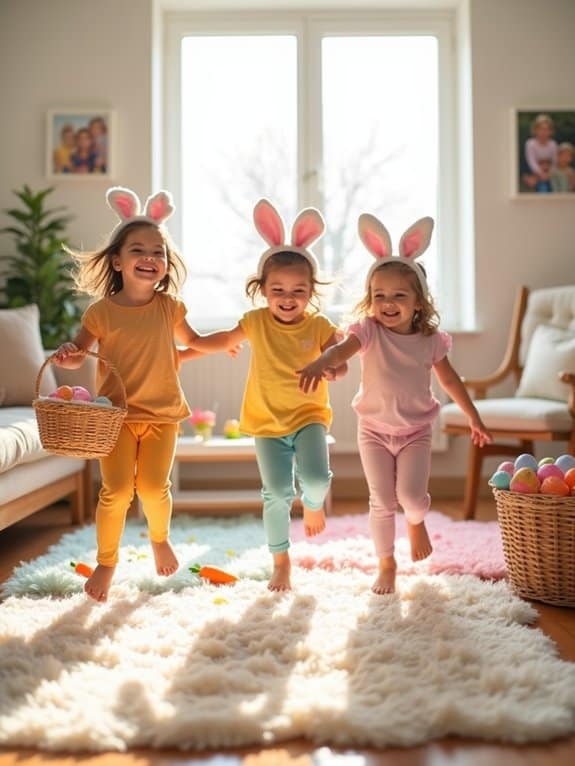
Inside, you can hide eggs in creative places, set up scavenger hunts with clues, or turn the living room into a bunny parade route.
Small touches like these often spark the biggest smiles.
Cleanup is also easier when activities are contained in one area, and many families discover their favorite Easter traditions begin with simple indoor celebrations.

Egg-Decorating Ideas for Toddlers and Preschoolers
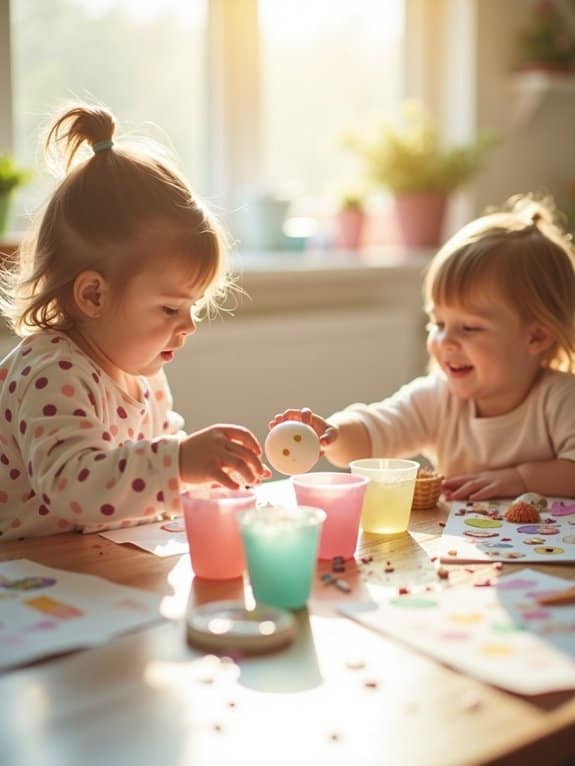
Looking for simple egg-decorating ideas that actually work with little hands? You’ll love Looking for simple egg-decorating ideas that work for little hands? Toddlers and preschoolers love quick projects that are colorful and easy to manage.
Set up washable markers, stickers, and small paintbrushes. Give each child a plastic or hard-boiled egg and let them experiment while you guide nearby.
Fun options include:
- Stickers and felt shapes – Kids can peel and stick decorations to create patterns or silly faces.
- Washable markers – Perfect for bold lines, scribbles, and colorful designs.
- Sponge dab painting – Cut small sponges and let kids stamp soft dots of paint that resemble spring flowers.
Display the finished eggs at kid height so children can proudly admire their creations.
Creative Egg Painting Projects for School-Age Kids
School-age kids often enjoy more detailed egg decorating techniques.
Try three creative methods that encourage creativity and experimentation.
First, experiment with layered watercolor washes on blown or wooden eggs. Start with light colors and gradually build depth as layers dry.
Second, use masking tape or stickers to create geometric patterns. Removing the tape reveals surprising shapes and crisp lines.
Third, try sponge dabbing or toothbrush splatter painting for fun textures that feel messy but controlled.
Set up aprons and small bowls of paint so kids can work freely.
Encourage bold designs and celebrate creativity.
Easy Paper and Felt Easter Crafts From Household Items
Once egg decorating wraps up, keep the creativity flowing with simple crafts made from materials around the house.
Kids can create bunnies, chicks, and tiny baskets using cardboard, felt scraps, and leftover craft supplies.
Easy craft ideas include:
• Felt finger puppets made from simple shapes
• Paper egg garlands strung across doorways
• Tiny cardboard baskets filled with paper grass
These projects keep kids engaged while encouraging imagination and creativity.
Simple Spring Sensory Bins to Make Today
Sensory bins are one of the most engaging indoor Easter activities for kids, especially for toddlers and preschoolers.
Start with a shallow plastic container and fill it with a textured base such as dyed rice, shredded paper, or dry oatmeal.
Add themed items like plastic eggs, foam flowers, and small toy animals.
Include tools like measuring cups, scoops, or tweezers to encourage fine motor play.
Rotate materials occasionally to keep the activity exciting.
Kids love exploring the textures and surprises hidden inside.

Indoor Scavenger Hunt Clues and Hiding-Spot Ideas
After a sensory bin session leaves little hands busy and bright, you can keep the fun going with an indoor scavenger hunt that sparks the same curiosity and fine-motor practice.
You’ll write simple picture or rhyme clues, tailoring difficulty for ages, and hide small prizes like foam eggs or stickers. Use familiar rooms and safe spots so kids feel confident, and watch their proud faces when they solve clues.
- Tuck a clue under a favorite storybook, next to a stuffed animal, or inside a low shoe.
- Tape a riddle to the back of a dining chair, or hide a card beneath a cereal box for an easy win.
- Put a colorful egg on a windowsill or behind a plant pot at child height.
Keep clues short, cheerful, and just tricky enough to giggle.
Living-Room Easter Obstacle Course
While the rest of the house settles, you can turn your living room into a bouncy, giggly obstacle course that keeps kids moving and smiling.
Clear a safe path, push furniture to the edges, and use cushions as stepping stones.
Lay a tape or yarn “balance beam” on the floor and time each child as they tiptoe across.
Create a tunnel with a blanket over two chairs and encourage crawls through, adding a stuffed bunny at the end for a reward.
Set up hula-hoops to jump in, a pillow pile to scramble over, and a small basket of soft balls to toss into a laundry basket target.
Keep rules simple, cheer loudly, and offer stickers or silly hats as prizes to boost enthusiasm.
Bunny-Hop Relay Games for Playdates
Because kids love moving like animals, you can turn a playdate into a bouncing, laugh-filled Bunny-Hop Relay that’s simple to set up and hard to forget. You’ll clear a hallway or living room, mark start and finish with cushions, and explain rules: hop like a bunny, tag the next friend, repeat.
Keep teams small so everyone gets turns and energy stays high.
- Little cones or stuffed bunnies as batons to grab and pass
- A soft pillow finish line where winners strike a silly pose
- Variations like one-foot hops, backward hops, or carrot-collecting detours
You’ll cheer, laugh at wobblers, and manage fair play with gentle reminders. It’s playful, active, and gives you a joyful break while kids burn off excitement.
Free Printable Easter Activity Sheets and Games
You’ll love how easy and fun printable Easter activity sheets make your celebration—just grab a stack, a few crayons, and a comfy spot, and you’ve got instant entertainment for kids of different ages.
Printables let you tailor activities: coloring pages for little ones, word searches and mazes for older kids, and simple matching games for mixed groups.
Set up a station with clipboards, pencil cups, and a timer to add gentle structure; offer stickers as rewards for finished pages.
I’ve seen shy kids light up when handed a themed sheet, and siblings cooperate over a tricky maze.
Search reputable sites for free, ad-light downloads, preview before printing, and keep extra copies on hand—easy, low-cost, and reliably joyful.
Easter Storytime and Puppet-Show Ideas
If you want a cozy, memorable way to share Easter themes, a storytime followed by a puppet show turns simple tales into hands-on magic that kids remember, laugh at, and sometimes even help direct.
You can pick a short Easter picture book, read with expressive voices, then invite kids to create sock or paper bag puppets and act out favorite scenes.
Keep roles simple so everyone participates, and improvise funny lines to keep giggles flowing. Use a small blanket as a curtain and a cardboard box stage, and guide children to take turns narrating or puppeteering.
Ideas to try:
- Short, rhyming tale read aloud, then puppet reenactment with 2–3 characters
- Puppet improv prompts like “lost egg” or “spring surprise”
- Costume scarves and sound effects for extra silliness
Easy Baking: Bunny Cookies and Mini Cupcakes
After the puppet curtain falls, keep the happy noise going by moving into the kitchen for some easy baking that kids can help with.
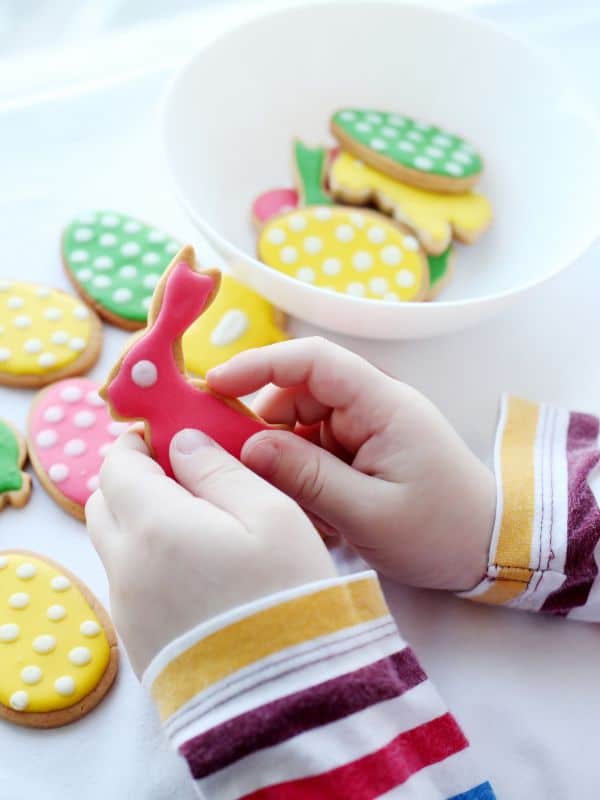
Invite your children to mix cookie dough from a simple recipe, then roll and cut bunnies with a cookie cutter; you can show them how to press ears gently and add chocolate chip eyes before baking.
While cookies cool, make mini cupcake batter together, pour into tins, and let each child fill cups halfway so cupcakes rise nicely.
Once cooled, let kids frost with pastel icing and decorate using sprinkles or small candies, keeping tools safe and utensils child-sized.
You’ll laugh at imperfect bunnies and proud smiles, and everyone gets to enjoy warm treats they made.
No-Bake Easter Treats Kids Can Assemble
Three simple no-bake treats can keep little hands busy and smiles wide while you skip the oven. You’ll guide kids through quick, safe steps and watch pride beam as they assemble colorful snacks.
Try easy recipes that use cereal, fruit, chocolate, and frosting—no heat, just creativity and minimal mess. Lay out bowls, spoons, and cookie cutters, then let them mix, press, and decorate.
- Rice cereal nests: press cereal with marshmallow, shape with a cup, add candy eggs.
- Fruit kabobs: alternate berries and banana slices, drizzle yogurt for dipping.
- Pretzel bunnies: stick mini pretzels to chocolate disks, add candy eyes and a sprinkle tail.
You’ll laugh, cheer, and taste together—simple, sweet memories made.
Simple Egg Science Experiments to Try Indoors
Egg experiments are always a hit—you’ll get curious hands, surprised faces, and a few giggles when chemistry shows up at your kitchen table.
Start with a simple floating egg: dissolve salt gradually in warm water and watch the egg rise, asking kids why density changes.
Try the classic vinegar bath to make a bouncy “naked” egg; check it gently every 24 hours and talk about shells dissolving.
Do a color diffusion demo by adding food coloring to different cups and moving water between them with a dropper, observing mixes and gradients.
Always set up trays, towels, and safety glasses, give clear step-by-step instructions, and let kids predict outcomes—guessing is half the fun.
Calming Easter Sensory Bottles and Jars
Calming sensory bottles and jars are simple, magical tools you can make at home to help kids pause, breathe, and settle when the excitement of Easter gets a little too buzzy.
You’ll gather clear bottles or jars, water or oil, food coloring, glitter, and small themed trinkets—then watch how watching slow motion calms squirmy hands.
Make a few for quiet corners, and show kids how to shake, set down, and follow sparkles as they fall.
- A pastel glitter jar with sequins and tiny plastic eggs, swirled gently to mimic a soft snow globe.
- A honey-oil bottle with floating foam bunny stickers, moving slowly like a sleepy parade.
- A calming blue water bottle with glitter, a dash of glycerin, and a drop of lavender oil.
DIY Easter Baskets and Gift-Holders
Baskets are more than containers—they’re tiny stages for surprises you and the kids can build together, and they’ll beam when they carry something you made with love.
Start by choosing a base: a paper plate, small box, or woven tray works well. Let kids pick colors, ribbons, and stickers, and show them how to fold, glue, or weave simple handles.
Add tissue paper nests to cushion treats and slip in small toys, notes, or homemade coupons. For sturdier holders, reinforce bottoms with cardboard circles and secure handles with tape before decorating.
Encourage personal touches—drawn faces, glittery initials, or nature finds from a short indoor scavenger hunt.
Finish by teaching gentle care, so each basket becomes a treasured gift.
Upcycled Egg-Carton and Cardboard Craft Projects
Grab your glue and a sense of adventure, because upcycled egg-carton and cardboard crafts turn trash into tiny treasures you and the kids will love making. You’ll gather egg cartons, cereal boxes, scissors, paints, and googly eyes, then cut, paint, and assemble simple shapes into animals, flowers, or mini baskets.
These projects teach resourcefulness, spark imagination, and keep little hands busy on rainy spring afternoons.
- Turn egg-cup molds into pastel flower bouquets with pipe-cleaner stems.
- Fold and decorate cardboard into tiny puppet theaters or Easter village houses.
- Paint carton halves as ladybugs, chicks, or colorful pom-pom nests for plastic eggs.
You’ll laugh, learn, and end up with charming decorations that feel special because you made them together.
Parent-Child Crafts to Make Together
When you sit down together with a pile of paper, glue, and a few silly supplies, you’re not just making crafts—you’re making memories that kids will hold onto long after the glue dries.
Invite your child to pick a simple project—paper-bag puppets, handprint chicks, or a felt bunny garland—and assign small roles so everyone feels helpful.
Work side by side: you cut, they glue; you paint, they decorate. Talk about colors, names, and stories while you craft; those conversations are as important as the finished piece.
Keep tools safe and take plenty of breaks for giggles and snacks.
Display the creations proudly, and let your child explain the story behind each one — you’ll both treasure those moments.
Quiet Independent Easter Activities for Kids
If you want some peaceful moments while the kids stay happily busy, set up a few quiet independent Easter activities that let them explore on their own.
Create simple stations with clear instructions and all materials within reach so they can rotate without asking for help. Label tubs, show one quick demo, then step back and sip your tea while they concentrate.
Quiet choices build focus and let imagination bloom.
- A color-by-number egg printable with crayons, a small clip board, and a cozy pillow.
- A sticker-scene kit: themed stickers, cardstock backgrounds, and a gentle story prompt.
- A puzzle tray: pre-cut bunny puzzle pieces sorted in a shallow box with a picture guide.
You’ll be surprised how long calm curiosity can last — and how proud they feel.
Age Adaptations: Toddlers, Preschoolers, and School-Age
Quiet independent stations work wonders, but kids at different ages need you to tweak particulars so activities fit their growing skills and attention spans.
For toddlers, keep tasks short and sensory: simple egg hunts with soft eggs, chunky crayons, and big stickers. Stay close, narrate steps, and cheer small wins.
For preschoolers, add choice and light challenge: matching colors, simple puzzles, or sticker scenes that build fine motor skills; offer two activity options so they feel in charge.
For school-age kids, raise complexity with scavenger clues, timed relay tasks, or craft kits that require cutting and planning; let them lead a mini hunt or help set up stations.
Always adapt instructions, materials, and supervision to match safety and patience levels.
Cheap Supplies You Probably Already Have
You don’t need a trip to the craft store to pull off a fun indoor Easter day—look around your home and you’ll find plenty that’s perfect for little hands.
Gather simple, safe items and you’ll be surprised how creative you can get; I often raid drawers and the recycling bin, and the kids love the scavenger feel.
Try these basics to spark games and crafts:
- Colored paper, old magazines, and scissors for paper eggs, garlands, and quick crowns.
- Empty toilet paper rolls, cardboard boxes, and tape for bunny tunnels, binoculars, or a mini obstacle course.
- Washable markers, leftover yarn, and safe glue for decorating, wrapping small prizes, and making soft pom-pom chicks.
These odds and ends keep costs low and let imagination lead the way.
Safety and Mess-Control Tips for Indoor Play
It helps to think ahead about safety and mess-control before the glitter and glue come out, especially when you’re using items from around the house.
Lay down a washable drop cloth or old sheet, tape edges to the floor, and set up a clear work zone so kids know where to stay. Use kid-safe scissors, non-toxic paints, and supervised hot-glue alternatives; keep tiny parts in a labeled bowl to avoid lost pieces and choking risks.
Keep wet wipes, paper towels, and a small trash bin within arm’s reach for quick cleanups. Put breakables and electronics out of reach, and wear aprons or oversized shirts to protect clothes.
Praise careful cleanup; turn tidying into a short, fun race so everyone helps without fuss.
Turn One Activity Into a Week of Easter Play
When you plan one simple Easter craft or game with a little extra thought, you can stretch it into fun for an entire week and keep kids excited without extra prep each day.
Pick a base activity—like decorating eggs, a scavenger hunt, or making bunny masks—and build tiny daily twists so each morning feels new. You’ll mix short bursts of creativity with playful learning, and kids will love the routine that still surprises.
- Day 1: Introduce the project and let them go wild with colors and stickers.
- Day 3: Add a challenge—time trials, pattern puzzles, or a storytelling round.
- Day 5: Host a mini showcase or parade; take photos and cheer loudly.
Rotate roles, keep supplies handy, and celebrate small wins.
How to Make Indoor Easter a Lasting Tradition
Start small and pick one or two simple rituals—like a morning muffin and story, a family egg hunt in the living room, or a craft table that stays set up for a few days—and watch them become the heart of your indoor Easter.
Choose activities that suit your space and energy, then repeat them each year so kids learn to expect and cherish them. Keep a box with decorations, favorite crafts, and a simple checklist you update yearly.
Invite everyone to add one new tiny tradition—perhaps a handwritten note in an egg or a silly hat parade—so the holiday grows without pressure.
Take photos, jot quick memories, and make the rituals flexible; rituals should welcome change, not cause stress. Soon those small acts will feel like family magic.
Final Thoughts On Indoor Easter Activities for kids
Indoor Easter celebrations can be just as magical as outdoor ones. With a little creativity and a few simple supplies, you can turn your home into a space full of laughter, imagination, and family fun.
Whether you try an indoor egg hunt, set up a decorating station, or bake Easter treats together, these indoor Easter activities for kids make it easy to keep everyone entertained while creating meaningful memories.
Start with a few activities that match your children’s ages and interests, then add your own traditions along the way. Before you know it, your cozy Easter at home may become the celebration your family looks forward to most each year.
More Easter Fun
If you would like to keep the Easter excitement going, these related posts share even more simple activities, ideas, and traditions that families love during the spring season.
- Easter Games for Kids – Easy Easter party games that keep kids laughing and moving during family gatherings, playdates, or classroom celebrations.
- Indoor Easter Egg Hunt Ideas – Creative indoor Easter egg hunt ideas that make the classic Easter tradition even more exciting for kids and families.
- Outdoor Easter Games for Kids – Fun backyard Easter games that get kids moving and laughing during spring celebrations.
- Easter Quotes for Kids – Sweet and cheerful Easter quotes that celebrate spring, joy, and the fun spirit of the holiday.